Get Your College logo
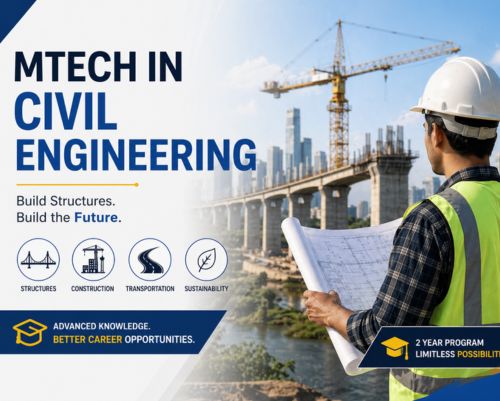
MTech Civil Engineering banner showing engineer with construction site background

MTech in Civil Engineering 2026: Fees, Eligibility, Top Colleges, Salary & Career Scope

April 25, 2026

If you want to build a career that literally shapes cities, infrastructure, and the future, then an MTech in Civil Engineering is one of the most powerful choices you can make. From highways and smart cities to sustainable buildings and mega infrastructure projects, civil engineers are at the centre of development.

But is pursuing an MTech in Civil Engineering really worth it in 2026? What about salary, fees, and job opportunities?

This guide covers everything you need to know in a simple, practical, and beginner-friendly way.

What is MTech in Civil Engineering?

MTech in Civil Engineering is a 2-year postgraduate program designed to build advanced knowledge in infrastructure, construction, and engineering design. It goes beyond basic concepts and focuses on specialisation, technical expertise, and real-world problem solving.

Unlike a BTech, this program prepares you for high-level roles in design, planning, and project management, making you industry-ready for complex engineering challenges.


What You Will Learn

  • Structural Engineering – Design and analysis of buildings, bridges, and infrastructure
  • Geotechnical Engineering – Soil mechanics and foundation design
  • Transportation Engineering – Roads, highways, and traffic systems
  • Environmental Engineering – Waste management and sustainable solutions
  • Construction Management – Project planning, costing, and execution
  • Advanced Software – Tools like AutoCAD, STAAD Pro, and other design software

Key Insights  

  • MTech = advanced skills + specialization
  • Focus on real-world engineering problems
  • Strong demand in the infrastructure and construction sector
  • Essential for senior-level roles and career growth

MTech in Civil Engineering helps you move from basic knowledge to expert-level skills, opening doors to better job roles and higher salaries.

Types of Specialisations in Civil Engineering

Choosing the right specialisation is crucial because it directly impacts your career path, job opportunities, and salary potential.

Popular Specializations

  • Structural Engineering
    Focuses on designing safe, durable structures such as buildings and bridges.
    👉 High demand in construction and infrastructure projects.
  • Geotechnical Engineering
    Deals with soil, foundations, and underground structures.
    👉 Important for large-scale construction projects.
  • Transportation Engineering
    Focuses on highways, railways, and traffic systems.
    👉 Growing demand due to smart city development.
  • Environmental Engineering
    Focuses on sustainability, pollution control, and water management.
    👉 Future-focused and high demand globally.
  • Construction Management
    Combines engineering with project management skills.
    👉 Ideal for leadership and managerial roles.
  • Water Resources Engineering
    Deals with water supply, irrigation, and flood control systems.
    👉 Critical for environmental and infrastructure planning.

Key Insights  

  • Structural + Construction = highest job demand
  • Environmental = future-focused specialization
  • Transportation = growing with smart cities
  • Choose based on interest + career goals, not trend

Your specialisation defines your future. Choose a field that aligns with your skills, interests, and long-term career vision.

What is MTech in Civil Engineering?

MTech in Civil Engineering is a 2-year postgraduate degree that focuses on advanced concepts in infrastructure, construction, and engineering design. It is designed for students seeking specialised knowledge and technical expertise beyond their undergraduate studies.

This program helps you move from basic engineering roles to high-level positions in design, planning, and project management.

What You Will Learn

  • Structural design and analysis
  • Soil mechanics and foundation engineering
  • Transportation and highway engineering
  • Environmental and sustainable engineering
  • Construction planning and project management
  • Advanced software tools like AutoCAD and STAAD Pro

Key Insights 

  • MTech = advanced learning + specialization
  • Focus on real-world engineering problems
  • Essential for senior roles and career growth

MTech in Civil Engineering is ideal for students who want to build expertise, increase salary potential, and grow into leadership roles in the engineering field.

Top Civil Engineering Colleges in India (2026)

Choosing the right college is one of the most important decisions for your civil engineering career. A good college not only provides quality education but also gives you better placements, industry exposure, and practical learning opportunities.

Top institutes in India are known for their strong faculty, advanced labs, research facilities, and industry collaborations, which help students become job-ready

Top Government Colleges

  • Indian Institute of Technology Bombay
    One of the best engineering institutes in India, known for advanced research, high-quality faculty, and excellent placement opportunities in core engineering sectors.
  • Indian Institute of Technology Delhi
    Offers strong academic programs with a focus on innovation, design, and real-world engineering challenges.
  • Indian Institute of Technology Madras
    Highly reputed for civil engineering, especially in structural and environmental engineering research.
  • National Institute of Technology Trichy
    One of the top NITs with strong placement records, affordable fees, and excellent infrastructure.
  • Indian Institute of Technology Kharagpur
    Known for its legacy, large campus, and strong civil engineering department.

Top Private Colleges

  • Vellore Institute of Technology
    Popular for its modern infrastructure, industry-focused curriculum, and good placement opportunities.
  • SRM Institute of Science and Technology
    Offers strong exposure to practical learning, internships, and global collaborations.
  • Manipal Institute of Technology
    Known for hands-on learning, a strong alumni network, and consistent placement performance.

Key Insights 

  • IITs = top-tier education + highest placements
  • NITs = best ROI + strong core engineering focus
  • Private colleges = good infrastructure + industry exposure
  • College reputation = a major factor in job opportunities

If possible, aim for IITs or NITs for maximum career benefits. However, with the right skills, even private colleges can lead to successful careers in civil engineering.

Top Civil Engineering Specialisations (2026)

Choosing the right specialisation in civil engineering is crucial because it directly affects your career path, job opportunities, and salary growth. Each specialisation focuses on a different aspect of infrastructure and development.

Popular Specializations

  • Structural Engineering
    Focuses on designing buildings, bridges, and structures.
    👉 One of the highest-demand and highest-paying fields.
  • Geotechnical Engineering
    Deals with soil, foundation, and underground construction.
    👉 Essential for large infrastructure projects.
  • Transportation Engineering
    Focuses on roads, highways, railways, and traffic systems.
    👉 Growing rapidly due to smart city development.
  • Environmental Engineering
    Focuses on sustainability, waste management, and pollution control.
    👉 High demand due to global environmental concerns.
  • Construction Management
    Combines engineering with management skills.
    👉 Ideal for leadership roles like a project manager.
  • Water Resources Engineering
    Deals with water supply, irrigation, and flood management.
    👉 Important for sustainable development projects.

Key Insights 

  • Structural + Construction = top career opportunities
  • Environmental = future-focused specialization
  • Transportation = growing with urban development
  • Choose based on interest + long-term demand

Your specialisation defines your future. Choose a field that matches your skills, interests, and industry demand to maximise career success.

1. Is MTech in Civil Engineering Worth It in 2026? (ROI Analysis)

The value of an MTech in Civil Engineering depends on one key factor: return on investment (ROI). In 2026, with rapid infrastructure growth and smart city projects, the demand for skilled civil engineers is steadily increasing.

ROI Breakdown

  • Low Cost (Govt Colleges): ₹50,000 – ₹2 Lakhs
  • Average Starting Salary: ₹4 – ₹8 LPA
  • Long-Term Salary: ₹10 – ₹20 LPA+

👉 This makes MTech a high ROI degree, especially if completed from a reputed college.

Key Insights  

  • Government colleges = best ROI
  • MTech = higher salary + better roles
  • Demand driven by infrastructure and urban development

Yes, MTech in Civil Engineering is worth it in 2026, especially if you aim for specialisation and long-term career growth.

2. GATE Requirement for MTech Civil Engineering – Do You Need It?

GATE (Graduate Aptitude Test in Engineering) is the main entrance exam for MTech admissions in India.

Do You Need GATE?

  • Yes (For Top Colleges): IITs, NITs, and government institutes
  • Not Always (Private Colleges): Some private universities offer direct admission

Why GATE is Important

  • Required for top-ranked institutes
  • Helps you get scholarships/stipends
  • Improves your career opportunities

Key Insights (Ahrefs Style)

  • GATE = gateway to top colleges
  • High score = better college + better placement
  • Optional for private colleges, but recommended

If you want the best colleges and the highest ROI, clearing GATE is highly recommended.

Civil engineering is evolving with technology and sustainability. Understanding these trends can help you choose the right specialisation and stay ahead.

  • Smart Cities Development
    Integration of IoT and data systems into urban infrastructure.
  • Sustainable Construction
    Use of eco-friendly materials and energy-efficient designs.
  • Green Buildings
    Focus on reducing environmental impact and energy consumption.
  • AI and Automation in Construction
    Improved project planning, safety, and efficiency.
  • Advanced Materials Technology
    Stronger, lighter, and more durable construction materials.

Key Insights  

  • Future = tech-driven + sustainable engineering
  • AI + automation = increasing efficiency
  • Green construction = global priority

Civil engineering is becoming smarter, greener, and more technology-driven, creating exciting future opportunities.

4. Expert Tips to Build a Successful Career in Civil Engineering

Success in civil engineering depends on skills, strategy, and continuous learning.

Proven Expert Tips

  • Focus on Core Concepts
    Strong fundamentals are essential for long-term success.
  • Learn Industry Software
    Tools like AutoCAD, STAAD Pro, and BIM are highly valuable.
  • Gain Practical Experience
    Internships and site work improve your real-world understanding.
  • Choose the Right Specialisation
    Align your specialisation with market demand and personal interest.
  • Stay Updated with Trends
    Keep learning about new technologies and industry changes.

Key Insights 

  • Skills > degree in long-term
  • Practical experience = career growth
  • Continuous learning = competitive advantage

A successful career in civil engineering requires more than a degree—it needs skills, experience, and smart career decisions

Why Choose MTech in Civil Engineering?

 If you want to move beyond entry-level roles and build a high-impact engineering career, an MTech in Civil Engineering is a smart next step. It equips you with specialised skills, deeper technical knowledge, and better career opportunities in the infrastructure sector.

Key Benefits

Higher Salary Compared to BTech

MTech graduates often get access to better-paying roles and faster career growth.

  • Specialised Knowledge and Expertise
    You gain in-depth knowledge in a specific domain, making you an industry expert.
  • Better Career Opportunities
    Opens doors to roles in design, consulting, project management, and research.
  • Eligibility for Teaching and Research Roles
    Required qualification for becoming a lecturer or pursuing a PhD.
  • Opportunity to Work on Large-Scale Projects
    From highways to smart cities, you can work on nation-building projects.

Key Insights 

  • MTech = career upgrade, not just a degree
  • Specialisation = better job roles + salary
  • Required for teaching, research, and a senior role

If your goal is long-term growth and expertise, MTech in Civil Engineering gives you a clear competitive advantage.

Eligibility Criteria

Before applying, it’s important to understand whether you meet the basic academic and entrance requirements.

Basic Requirements

  • BTech/BE in Civil Engineering or Related Field
    You must have a relevant undergraduate degree from a recognised university.
  • Minimum 50%–60% Marks
    Most colleges require a minimum percentage for eligibility.
  • Valid GATE Score (for Top Colleges)
    Required for admission into premier institutes and government colleges.

Key Insights  

  • GATE score = key for top colleges
  • Minimum marks = basic eligibility filter
  • Strong academic background = higher admission chances

Meeting eligibility is easy—but getting into top colleges requires a strong GATE score and solid academic profile.

Admission Process  

The admission process for MTech in Civil Engineering is structured and competitive, especially for top institutes.

Step-by-Step Process

  • Complete BTech/BE
    Ensure you meet the required academic criteria.
  • Prepare and Clear GATE Exam
    This is the most important step for getting into top colleges.
  • Apply Through COAP or Institute Portals
    Submit applications based on your GATE score.
  • Participate in Counselling
    Choose colleges and specialisations during counselling rounds.
  • Secure Admission
    Accept the offer and complete admission formalities.

Key Insights  

  • GATE = main gateway for admission
  • Early preparation = better rank + better college
  • Counselling = critical decision stage

A clear strategy and strong GATE preparation can help you secure admission in a top MTech Civil Engineering college.

MTech Civil Engineering Fees (2026)

Understanding the fee structure helps you plan your investment and evaluate the return on investment (ROI) of your degree. The cost of MTech in Civil Engineering varies significantly between government and private institutions.

Government Colleges

  • ₹50,000 – ₹2 Lakhs (Total for 2 Years)
    👉 Highly subsidised and affordable

Private Colleges

  • ₹2 Lakhs – ₹6 Lakhs (Total for 2 Years)
    👉 Higher cost but more flexible admission options

Key Highlights 

  • Government colleges = low cost + high ROI
  • Private colleges = higher fees but easier access
  • GATE-qualified students can get scholarships/stipends
  • Overall investment = worth it for long-term growth

If you secure a seat in a government college, MTech in Civil Engineering becomes a highly affordable and high-return investment.

Top Colleges for MTech Civil Engineering

Choosing the right college plays a major role in your career growth, placements, and exposure.

Top Institutes in India

  • Indian Institute of Technology Bombay
    Known for top-level research, infrastructure, and placement opportunities.
  • Indian Institute of Technology Delhi
    Offers strong academic programs with excellent industry connections.
  • National Institute of Technology Trichy
    One of the best NITs with strong placement records.
  • Indian Institute of Technology Madras
    Renowned for innovation, research, and global recognition.

Key Insights  

  • IITs = top placements + research opportunities
  • NITs = strong ROI + affordable fees
  • College brand = major impact on career growth

Your college choice can directly influence your career opportunities, salary, and professional network.

Career Scope After MTech Civil Engineering

MTech in Civil Engineering opens up a wide range of career opportunities across multiple sectors, especially with increasing infrastructure development.

Where You Can Work

  • Construction Companies
    Work on residential, commercial, and industrial projects.
  • Government Sector (PWD, Railways)
    Stable jobs with benefits and long-term growth.
  • Infrastructure Companies
    Involved in highways, bridges, metro, and smart city projects.
  • Consulting Firms
    Provide design, planning, and project management solutions.
  • Research and Academics
    Opportunities in teaching, PhD, and innovation-based roles.

Key Insights  

  • Civil engineering = core sector with constant demand
  • Government jobs = stability + security
  • Private sector = higher growth + dynamic roles
  • Research roles = ideal for long-term academic careers

With rising demand in infrastructure and development projects, MTech Civil Engineering offers stable, diverse, and high-growth career opportunities

Job Roles After MTech in Civil Engineering

An MTech degree opens the door to specialised and high-responsibility roles in the civil engineering sector. Your job role will depend on your specialisation, skills, and experience.

Top Job Roles

  • Structural Engineer
    Designs and analyses buildings, bridges, and other structures to ensure safety and durability.
  • Site Engineer
    Manages on-site construction activities and ensures projects are executed as per plan.
  • Project Manager
    Oversees complete projects, including planning, budgeting, and team coordination.
  • Design Engineer
    Works on technical designs and drawings using advanced engineering software.
  • Environmental Engineer
    Focuses on sustainable development, pollution control, and environmental protection.

Key Insights 

  • Structural + Design roles = high demand
  • Project Manager = high salary + leadership role
  • Environmental roles = future-focused career path

MTech helps you move into specialised and leadership roles, not just basic engineering jobs.

Salary After MTech Civil Engineering

Salary after MTech depends on your skills, college, and job role, but overall, it offers better earning potential than a BTech.

Average Salary

  • Freshers: ₹4 LPA – ₹8 LPA
  • Experienced (5+ Years): ₹10 LPA – ₹20 LPA+

👉 Government Jobs: Offer stability, job security, and additional benefits.

Key Insights 

  • Salary grows with experience and specialisation
  • Private sector = faster growth potential
  • Government sector = stability + long-term benefits

While starting salaries are moderate, the long-term earning potential is strong, especially with experience and skill development.

Benefits of MTech in Civil Engineering

Pursuing MTech in Civil Engineering offers both career growth and long-term stability.

Key Benefits

  • Strong Demand in the Infrastructure Sector
    Continuous development in roads, bridges, and smart cities ensures consistent job demand.
  • Opportunity to Work on National Projects
    Be part of large-scale projects that contribute to the country's development.
  • High Job Stability
    Civil engineering remains a core industry with long-term security.
  • Growth in Government and Private Sectors
    Opportunities available in both sectors with different benefits and career paths.

Key Insights 

  • Civil engineering = evergreen career field
  • Infrastructure growth = increasing job demand
  • MTech = better roles + better stability

An MTech in Civil Engineering is a future-proof career investment, offering stability, growth, and meaningful work in building the nation.

MTech vs BTech (Comparison)

Understanding the difference between BTech and MTech helps you decide whether pursuing a postgraduate degree is the right move for your career.

FactorBTechMTech
LevelUndergraduatePostgraduate
SalaryModerateHigher
SkillsBasic technical knowledgeAdvanced and specialised expertise
OpportunitiesLimited to entry-level rolesAccess to specialised and senior roles

Key Insights 

  • B.Tech. = foundation of engineering
  • MTech = specialization + career upgrade
  • MTech graduates get better roles and higher salaries
  • Required for research, teaching, and advanced positions

BTech gives you entry into the field, but MTech helps you stand out, specialise, and grow faster in your career.

The civil engineering industry is evolving rapidly with technology and sustainability at its core. Staying updated with trends can give you a competitive advantage.

    + specialisation
  •  Cities Development
    Integration of technology with infrastructure for better urban living.
  • Sustainable Construction
    Focus on eco-friendly materials and energy-efficient designs.
  • Green Buildings
    Increasing demand for environmentally responsible construction practices.
  • AI in Construction
    Use of artificial intelligence for project planning, safety, and efficiency.
  • Advanced Materials Technology
    Development of stronger, lighter, and more durable construction materials.

Key Insights  

  • Future = tech-driven civil engineering
  • Sustainability = major global focus
  • AI + automation = changing project execution

Civil engineering is no longer traditional—it’s becoming a technology-driven and innovation-focused industry.

Pros and Cons of MTech in Civil Engineering

Before making a decision, it’s important to evaluate both the advantages and challenges.

Pros

  • Higher Salary Potential
    Better earning opportunities compared to BTech graduates.
  • Better Expertise
    Deep knowledge in a specific field makes you more valuable.
  • More Career Options
    Access to specialised roles, research, and leadership positions.

Cons

  • Requires 2 Extra Years
    Additional time investment after BTech.
  • GATE Preparation Needed
    A competitive exam is required for top colleges.
  • Competitive Admission
    Limited seats in top institutions make selection challenging.

Key Insights  

  • Pros = career growth + specialization
  • Cons = time + effort investment
  • Worth it if you aim for long-term success

MTech in Civil Engineering is a great option if you’re ready to invest time and effort for better career opportunities and higher growth.

Common Mistakes to Avoid

Many students make avoidable mistakes that can impact their admission, learning, and long-term career growth. Being aware of these pitfalls can help you make smarter decisions.

Top Mistakes

  • Choosing the Wrong Specialisation
    Selecting a field based on trends instead of your interests and career goals can limit your growth.
  • Ignoring GATE Preparation
    A weak GATE score can reduce your chances of getting into top colleges and better opportunities.
  • Not Focusing on Practical Skills
    Only theoretical knowledge is not enough—industry demands hands-on skills and software expertise.
  • Selecting Low-Quality Colleges
    College reputation plays a major role in placements, exposure, and career growth.

Key Insights 

  • n choice = career direction
  • GATE = gateway to top institutes
  • Skills > marks the long term
  • College quality = placement impact

Avoiding these mistakes can significantly improve your chances of success, better placements, and long-term career growth.

Expert Tips for MTech Civil Engineering

To stand out in a competitive field, you need a clear strategy and consistent effort.

Proven Expert Tips

  • Start GATE Preparation Early
    Early preparation gives you an advantage in securing a high rank and a top college.
  • Choose Specialisation Wisely
    Pick a field that matches your interests, strengths, and future career demand.
  • Focus on Software Skills
    Learn tools like AutoCAD, STAAD Pro, and other design software to become industry-ready.
  • Gain Internships
    Practical experience helps you understand real-world projects and improves your job prospects.

Key Insights 

  • Early prep = better results
  • Skills + specialisation = career success formula
  • Internships = real-world exposure

Success in MTech Civil Engineering depends on planning, skill development, and smart decisions—not just academic performance.

Conclusion 

MTech in Civil Engineering is a powerful career move for students who want to specialise, earn more, and work on impactful projects. With increasing demand in infrastructure and smart cities, this field offers long-term growth and stability.

👉 If you’re serious about building a strong engineering career, start preparing today and take the next step toward MTech in Civil Engineering!

Q1: Is MTech in Civil Engineering worth it?

Yes, for a higher salary and specialisation.

Q2: What is duration?

2 years.

Q3: Is GATE compulsory?

Yes, for top colleges.